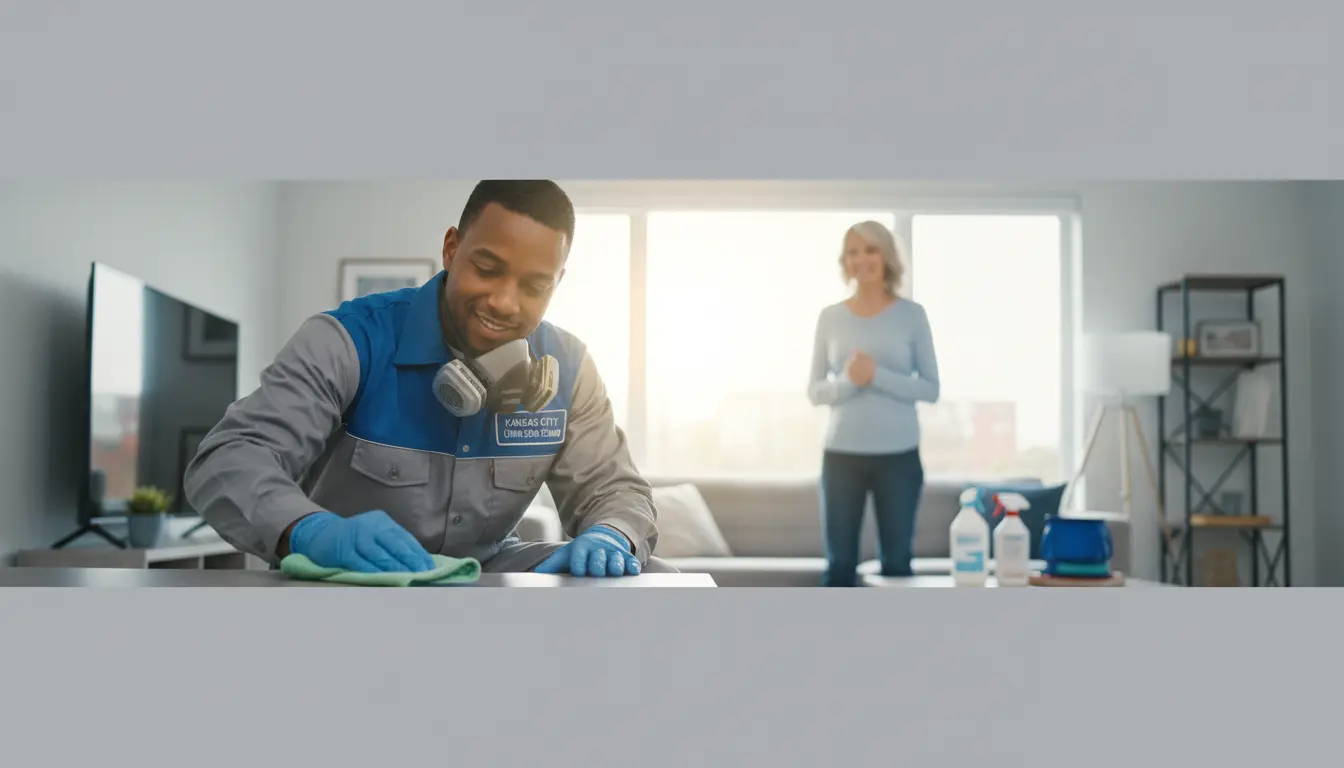
You have just inherited a property in Kansas City, Missouri, and the first thing you notice is a faint, sweetish odor that no amount of air freshener can mask. Or perhaps you are a landlord in Pendleton Heights who walked into a rental unit and found bloodstains that the previous tenant tried to scrub away with bleach. The most expensive mistake you can make at this moment is to assume that surface cleaning is enough. Every day you delay hiring a professional biohazard remediation team, biological fluids wick deeper into porous wood, subflooring, and drywall, creating a permanent health hazard and slashing your property’s value by thousands of dollars. In Kansas City’s humid summers, that decomposition process accelerates, turning a contained scene into a structural nightmare. Understanding how crime scene cleanup actually works in Kansas City, MO, is the first step to protecting your family, your tenants, and your investment.
Professional crime scene cleanup is not housekeeping. It is a scientifically rigorous process governed by OSHA’s Bloodborne Pathogens Standard (29 CFR 1910.1030), the IICRC S540 standard for trauma and crime scene remediation, and the EPA’s regulations for disposal of regulated medical waste. In a city like Kansas City, where historic mid-century homes in neighborhoods like Scarritt and Volker feature porous plaster and hardwood floors, the technical demands are even higher. This article will walk you through every phase of the remediation process, from initial risk assessment to final ATP testing, and explain why only a certified, locally experienced team can restore your property safely and completely.
The Technical Process of Crime Scene Cleanup in Kansas City
Professional remediation begins long before any cleaning solution touches a surface. The first step is a comprehensive risk assessment. A certified technician arrives in full personal protective equipment (PPE) — including Tyvek suits, N95 or P100 respirators, and chemical-resistant gloves — and evaluates the scene for bloodborne pathogens, sharps, and hidden biological seepage. In Kansas City, the age of the building matters. Many homes in Ivanhoe and North Kansas City were built in the 1940s and 1950s, with unsealed wooden floor joists and original plaster walls. These materials act like sponges for blood, tissue, and bodily fluids, meaning the visible stain is never the full story.
Once the risk assessment is complete, the team establishes containment zones. Industrial-grade negative air machines are set up to create a pressure differential, preventing airborne pathogens from migrating to unaffected areas of the property. This is especially critical in multifamily homes or attached units common in the Kansas City metro area. Next, all biohazardous materials are physically removed. That includes saturated carpet, padding, subflooring, drywall, and insulation — anything porous that cannot be fully decontaminated. The waste is double-bagged in red biohazard bags, labeled, and transported to an authorized medical waste incinerator in compliance with Missouri Department of Natural Resources regulations.
After removal, the remediation team performs a thorough cleaning using EPA-registered hospital-grade disinfectants with proven efficacy against Hepatitis B, Hepatitis C, HIV, and MRSA. These disinfectants are applied with electrostatic sprayers that ensure even coverage on complex surfaces like chandeliers, crown molding, and window casings. In Kansas City’s climate, where humidity can exceed 80% in July, the drying time becomes a critical factor. Technicians use air movers and dehumidifiers to accelerate drying and prevent mold growth, which compounds the original biohazard problem. Finally, every surface is tested using adenosine triphosphate (ATP) fluorescence testing. ATP is a molecule found in all living cells, and a reading above the threshold indicates incomplete cleaning. The area is re-cleaned until the test passes, ensuring that the site is biologically safe for reoccupancy.
| Feature/Metric | Professional Biohazard Remediation | Standard Residential Cleaning |
|---|---|---|
| Regulatory Compliance | Follows OSHA 29 CFR 1910.1030, EPA waste disposal, and IICRC S540 standards | No regulatory framework; cleaners may use household bleach |
| Pathogen Elimination | EPA-registered hospital-grade disinfectants with verified kill times for HIV, HBV, HCV | General purpose cleaners reduce visible dirt but do not eliminate bloodborne pathogens |
| Structural Assessment | Technician identifies hidden contamination in subflooring, HVAC ducts, and behind walls | Only surface cleaning; no assessment of hidden biological seepage |
| Waste Disposal | Proper segregation, labeling, and incineration by licensed medical waste haulers | Waste often goes to regular landfill, violating Missouri state law |
| Testing Verification | ATP fluorescence testing to confirm zero biological residue | No post-cleaning verification |
Expert Insights: What Only Professionals See
Experienced biohazard remediation specialists develop a sixth sense for hidden contamination. One diagnostic tip they rely on is the “smell test” — not just noticing the odor, but mapping its intensity. The strongest odor often pinpoints the source of the heaviest biological fluid accumulation. If the smell is strongest near a wall, the technician knows to check for wicking from the baseboard into the drywall. In Kansas City’s older homes, the original plaster and lath can trap fluids behind the surface, creating a persistent odor that standard cleaning cannot reach. The only solution is to remove the affected plaster and treat the lath with an antimicrobial sealant.
Another advanced technique is the use of thermal imaging cameras. After cleaning, a thermal camera can detect moisture pockets in walls and floors that indicate remaining biological fluids. In winter, the contrast between warm interior air and cold exterior walls makes these pockets especially visible. This is why many remediation jobs in Kansas City are scheduled with a follow-up inspection after 24–48 hours, when the HVAC system has fully cycled and any residual moisture has condensed.
Common mistakes property owners make include using household bleach on blood stains. Bleach is corrosive to surfaces and can actually denature proteins, but it does not fully eliminate bloodborne pathogens unless the surface is soaked for a full 10 minutes. Moreover, bleach cannot penetrate porous materials. A second mistake is waiting for the odor to “air out.” In Kansas City, by the time the odor is noticeable, the fluids have already soaked into the subfloor and framing, creating a smorgasbord for bacteria and insect activity. The third mistake is allowing family members or well-meaning neighbors to enter the scene before the professionals arrive. This exposes them to hidden needles, broken glass, and airborne pathogens, and it also contaminates the scene, making the remediation more complex and expensive.
Pricing: What to Expect for Crime Scene Cleanup in Kansas City
- Mobilization fee: Most professional companies charge a dispatch fee ranging from $150 to $350 to cover the cost of emergency response vehicles, PPE, and initial equipment setup. This is non-negotiable because the crew must be ready to deploy within 1–2 hours of the call.
- Hourly remediation rates: The actual labor cost usually falls between $125 and $250 per hour per technician. A typical homicide or unattended death cleanup requires 2–4 technicians working for 4–8 hours, depending on the size of the affected area. For a single room in a 1940s bungalow in Pendleton Heights, expect a total labor cost of $1,500 to $3,000.
- Disposal and material replacement: Biohazardous waste disposal fees range from $0.50 to $1.50 per pound, and the cost of replacing porous materials (carpet, drywall, insulation) is billed separately. In Kansas City, the total cost for a moderate scene (about 300 square feet of contamination) typically falls between $3,000 and $7,000. For scenes requiring extensive structural demolition, such as a full room with soaked flooring and wall studs, costs can exceed $10,000.
Three major factors influence the final price. First, the extent of structural material replacement. Historic homes in Volker and Ivanhoe often have thick plaster walls that require careful demolition and disposal, adding to labor hours. Second, the total volume of biohazardous waste. A single unattended death in summer can generate 50–100 pounds of soiled materials due to decomposition fluids. Third, the necessity for specialized HVAC decontamination. If the biological fluids or odors have entered the ductwork, the HVAC system must be cleaned and sealed, which can add $500 to $2,000 to the project.
Safety and Standards: The Backbone of Professional Cleanup
Every professional crime scene cleanup crew in Kansas City must operate under OSHA’s Bloodborne Pathogens Standard 29 CFR 1910.1030. This regulation mandates that all employees receive annual training on handling bloodborne pathogens, proper use of PPE, and emergency procedures. It also requires that the company have a written exposure control plan. In practice, this means the crew cannot simply mop the floor and leave; they must follow a strict chain of decontamination, from the highest-risk areas to the lowest. The IICRC S540 standard adds another layer by specifying the proper cleaning agents, contact times, and verification methods for trauma scenes.
Additionally, Missouri law requires that all biohazardous waste be treated or disposed of by a licensed medical waste transporter. Many property owners try to cut costs by bagging soiled materials themselves and putting them in the regular trash. That is illegal and exposes the waste hauler, landfill workers, and the community to infectious diseases. A professional remediation company like Kansas City Crime Scene Cleanup partners with authorized disposal facilities that incinerate the waste at temperatures exceeding 1,800°F, ensuring complete destruction of pathogens. For property owners in Kansas City, adopting these safety standards is not just about compliance — it is about protecting the next family who will live in that home.
Frequently Asked Questions About Crime Scene Cleanup in Kansas City, MO
What is the difference between crime scene cleanup and regular janitorial cleaning?
Crime scene cleanup, also known as biohazard remediation, is a specialized field that requires certification in bloodborne pathogen handling, structural assessment, and infectious waste disposal. A janitorial service uses general-purpose cleaners and mops, which cannot eliminate HIV, Hepatitis B, or MRSA from porous surfaces. Professional remediation follows a multi-step process — removal, disinfection, testing, and encapsulation — that meets the IICRC S540 standard. In Kansas City, the difference is especially stark because of the prevalence of older homes with porous materials where pathogens can survive for weeks.
How long does professional crime scene cleanup take in the Kansas City area?
The duration depends on the extent of the contamination. A small, contained scene (e.g., a single room with a suicide or accidental death) typically takes 4 to 6 hours for a three-person crew. A larger scene involving multiple rooms or a decomposed body can take 8 to 12 hours over two days. The cleanup must be thorough, not rushed, because ATP testing does not pass if even a microscopic amount of biological material remains. In Kansas City, seasonal factors like high humidity can slow down drying times, adding an extra hour or two to the process. For a detailed breakdown, see our article on how long professional cleanup takes in the KC area.
Does homeowners insurance cover crime scene cleanup in Kansas City?
Most standard homeowners insurance policies in Missouri cover the cost of biohazard remediation under the “sudden and accidental” damage clause, as long as the event is not excluded by a specific endorsement. However, coverage limits vary, and some policies cap the amount at $5,000. It is crucial to contact your insurance provider immediately after the incident and request a written confirmation of coverage. Professional remediation companies often work directly with insurance adjusters to ensure the claim is processed correctly. To learn more about what is covered, read our guide on Kansas City crime scene cleanup and insurance coverage.
Can I stay in my home during the cleanup?
No. For your safety, you must vacate the property until the remediation team has completed the entire process and passed the final ATP test. The area is contaminated with airborne pathogens, sharp objects, and chemical disinfectants that can irritate the respiratory system. In Kansas City, where many homes have shared HVAC systems, the contamination can spread to other rooms. The crew will set up containment barriers and negative air pressure to prevent cross-contamination, but it is safest to stay elsewhere for 24 to 48 hours. After the final inspection, the team will provide a written clearance certificate confirming the site is safe for reoccupancy.
Professional Biohazard Remediation in Kansas City — Restoring Safety and Peace of Mind
Crime scene cleanup in Kansas City, MO, is a precise, scientific process that demands local knowledge, technical expertise, and unwavering compassion. From the initial risk assessment to the final ATP test, every step is designed to eliminate health hazards and restore your property to a habitable, odor-free condition. The hidden costs of DIY cleanup — including legal liability, long-term health risks, and permanent structural damage — far outweigh the professional fees. By choosing a certified team that understands the unique challenges of Kansas City’s housing stock and climate, you are not just cleaning a scene; you are protecting the future of your property and the well-being of everyone who will live in it.
If you are facing a traumatic event in Kansas City, do not wait. The sooner professional remediation begins, the less damage the biological materials will cause. Kansas City Crime Scene Cleanup offers 24/7 emergency response, direct insurance billing, and a discreet, respectful service that treats every client with dignity. Let us handle the technical details so you can focus on healing.