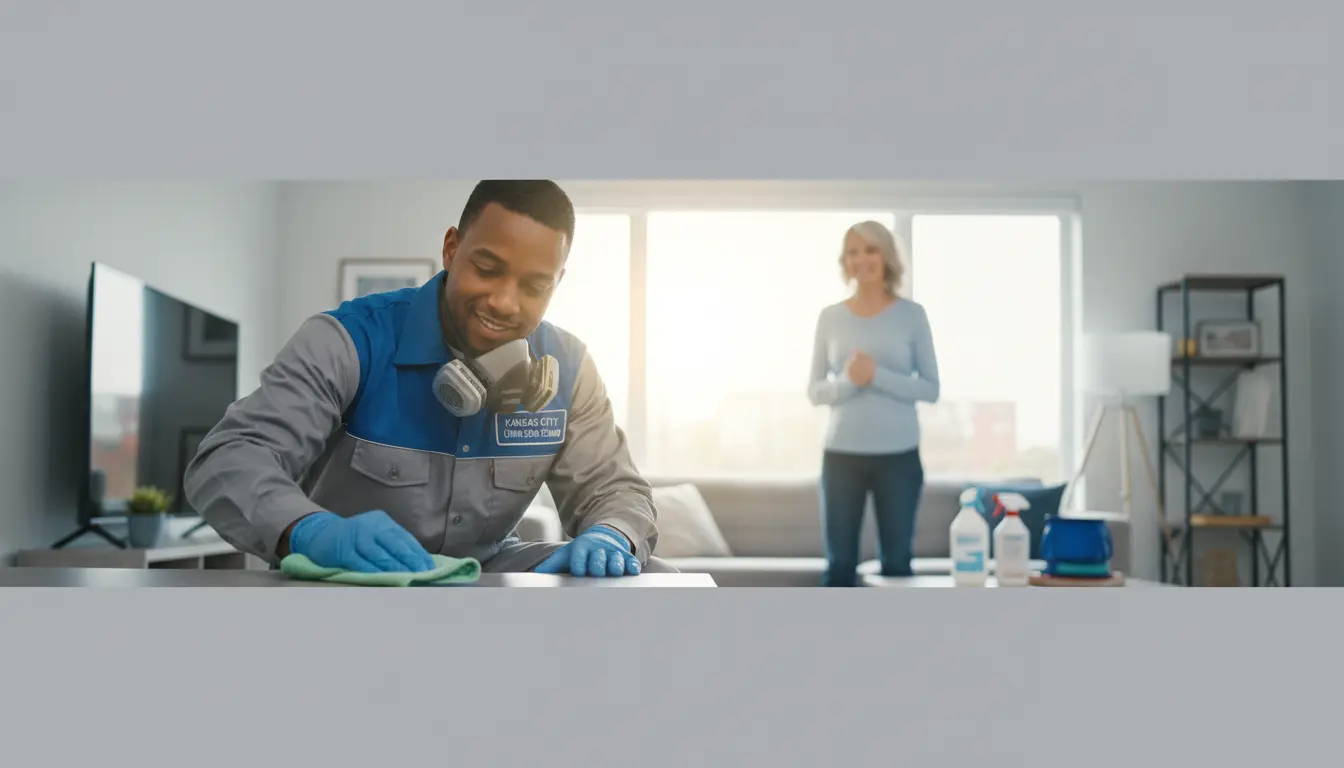
You grab a mop, a bucket of bleach, and a few rags, thinking you can scrub away the aftermath of a traumatic event just like you would a spilled glass of wine. That instinct to restore order quickly is understandable, but it is also the single most expensive and dangerous mistake a property owner in Kansas City can make. Standard cleaning products and techniques are not formulated to eliminate bloodborne pathogens, nor do they address the invisible biological seepage that penetrates porous wood, drywall, and concrete. The result is not just a lingering odor or an unsightly stain—it is a legally liable, structurally compromised property that can endanger every person who steps inside. Understanding the difference between crime scene cleanup vs standard cleaning: what’s the difference is not academic; it is a matter of safety, compliance, and financial protection for your home or business.
Professional biohazard remediation in Kansas City follows a rigorous, science-based protocol that goes far beyond what any janitorial service can provide. From the moment a trauma occurs, biological materials begin to degrade, and the warm, humid summers of the Midwest accelerate that process dramatically. Pathogens such as hepatitis B, hepatitis C, HIV, and MRSA can remain viable on surfaces for days or even weeks, especially when temperatures and moisture levels fluctuate inside older homes common in neighborhoods like Volker, Pendleton Heights, or Scarritt. Without proper containment, these contaminants can travel through HVAC systems, infecting entire living spaces. A standard cleaning crew, no matter how well-intentioned, lacks the training, equipment, and regulatory knowledge to safely handle this situation.
Kansas City Crime Scene Cleanup stands as the premier, authoritative, and discreet service provider in the region, certified to the IICRC S540 standard and fully compliant with OSHA’s Bloodborne Pathogens Standard 29 CFR 1910.1030. Our technicians understand the unique challenges of remediating historic mid-century residential construction, where lead-based paint, asbestos, and aging plumbing can complicate decontamination. We do not just clean; we restore safety and peace of mind. Before you pick up a sponge, let us walk through exactly what separates professional crime scene cleanup from standard cleaning—and why the difference matters for every Kansas City property owner.
The Technical Process: How Professional Remediation Differs from Standard Cleaning
Standard residential cleaning focuses on aesthetics: removing visible dirt, dust, and grime to make a space look tidy. A housekeeper might use all-purpose cleaners, microfiber cloths, and a vacuum. Professional biohazard remediation, by contrast, is a systematic decontamination process designed to eliminate all biological hazards, restore the environment to a safe condition, and prevent cross-contamination. The workflow typically involves six distinct phases, each backed by scientific principles and regulatory requirements.
The first phase is a comprehensive initial risk assessment. A certified technician evaluates the scene to identify all biological materials, assess the extent of saturation, and determine the porosity of affected surfaces. In Kansas City, where many homes were built before 1970 with plaster walls and hardwood floors, this assessment must account for materials that can absorb fluids deeply. The technician also measures environmental conditions such as temperature and humidity, which directly influence the decay rate and the persistence of pathogens. Based on this assessment, a containment zone is established using negative air pressure machines equipped with HEPA filtration. These machines create a vacuum that prevents airborne contaminants from escaping to unaffected areas, something a standard cleaning crew would never consider.
Next comes the setup of personal protective equipment (PPE) protocols. Technicians don Tyvek suits, nitrile gloves, full-face respirators with P100 filters, and boot covers. This is not optional; it is mandated by OSHA to protect workers from exposure. Standard cleaners wear latex gloves at most, which provide no protection against needle sticks or bloodborne pathogens. Once PPE is in place, the physical removal of biohazardous waste begins. All visibly contaminated materials—carpet, padding, drywall, insulation, flooring, and any porous items—are carefully cut out, bagged in red biohazard bags, and sealed according to state and federal regulations. In Jackson County, disposal must be handled by a licensed medical waste hauler, not thrown in the regular trash.
After removal, the remaining surfaces undergo chemical sanitization using EPA-registered hospital-grade disinfectants. These are not household bleach solutions; they are specialized formulations with validated contact times against specific pathogens. For example, a quaternary ammonium compound or an accelerated hydrogen peroxide solution must remain wet on the surface for ten minutes to achieve a 6-log reduction (99.9999% kill rate) of bacteria and viruses. Standard cleaning wipes have a contact time of 30 seconds to 2 minutes, which is insufficient. To verify effectiveness, professionals use adenosine triphosphate (ATP) fluorescence testing. A swab of the cleaned surface is inserted into a handheld luminometer that measures biological residue in relative light units (RLUs). A reading below 30 RLU indicates a hygienically clean surface; anything higher means re-cleaning is required. No standard cleaning service performs this verification.
Finally, the area is treated with an encapsulant or antimicrobial sealant on porous surfaces that cannot be removed, such as subflooring or studs. This step locks in any residual microscopic material and prevents future outgassing of odors. In Missouri’s climate, where humidity swings from oppressive summer highs above 90% to dry winter lows, encapsulation is critical to prevent mold and bacterial regrowth. The entire process can take anywhere from four hours to several days, depending on the severity of the contamination. For a comparative timeline, see our article on how long does professional cleanup take in the KC area.
Data Comparison: Professional Remediation vs. Standard Janitorial Cleaning
To illustrate the concrete differences, the following table compares key metrics between professional biohazard remediation and standard residential cleaning, based on the IICRC S540 standard and OSHA regulations.
| Feature/Metric | Professional Biohazard Remediation | Standard Residential Cleaning |
|---|---|---|
| Regulatory Compliance | Full compliance with OSHA 29 CFR 1910.1030, EPA FIFRA, DOT hazardous materials transport, and state medical waste rules | None; no training in bloodborne pathogens or hazardous waste handling |
| Pathogen Elimination | Uses EPA-registered hospital-grade disinfectants with validated contact times; ATP testing verifies 6-log reduction | Household cleaners and bleach; contact times too short; no testing performed |
| Structural Assessment | Evaluates porosity, moisture content, and hidden seepage; removes and replaces affected materials | Only cleans visible surfaces; does not test for contamination below the surface |
| Containment | Negative air pressure, HEPA filtration, and sealed barriers to prevent cross-contamination | No containment; contaminants can spread via dust and airflow |
| Odor Removal | Enzyme treatments, ozone or hydroxyl generators, and thermal fogging to neutralize volatile organic compounds | Air fresheners or candles that only mask odors |
| Waste Disposal | Red biohazard bags, licensed medical waste incineration, chain-of-custody documentation | Trash bags taken to curb; illegal and dangerous |
Expert Insights: Advanced Diagnostic Tips and Common Mistakes
With over a decade of field experience across Kansas City, our remediation specialists have developed diagnostic techniques that go beyond the standard protocol. Here are three advanced tips that property owners rarely hear about.
Detecting hidden biological seepage. Blood and other bodily fluids do not just sit on the surface. They wick into porous materials like drywall, wood, and concrete through capillary action. A trained technician uses a moisture meter and thermal imaging camera to find areas of elevated moisture that may indicate hidden saturation. In a 1950s bungalow in Ivanhoe, we once discovered that a small bloodstain on a hardwood floor had seeped through the wood, soaked the particleboard underlayment, and traveled along the subfloor joists for three feet in either direction. Standard cleaning would have missed that entirely, leaving a biohazard zone active inside the walls. If you suspect any biological fluid has touched a porous surface, replacement is almost always necessary—cleaning alone cannot guarantee safety.
Why porous materials require replacement rather than cleaning. Even after aggressive scrubbing and chemical disinfection, pathogens can survive inside microscopic pores. Laboratory studies have shown that hepatitis B virus can remain infectious on dry surfaces for at least seven days. When a material like carpet padding or unsealed grout is contaminated, the structural integrity of the material itself prevents complete penetration of disinfectants. The only reliable solution is removal and replacement. Property owners who try to save money by cleaning porous materials often end up with recurrent odors, mold growth, and potential liability if a future occupant becomes ill.
The importance of negative pressure to prevent cross-contamination. When you scrub a stain, you create aerosolized particles. Standard cleaning sprays and agitation can launch bloodborne pathogens into the air, where they can travel through ventilation systems. Professional remediation uses negative air machines set up before any cleaning begins. These machines exhaust air outside through HEPA filters, creating a pressure differential that pulls airborne contaminants into the machine rather than allowing them to spread. In multi-unit buildings common in Kansas City’s historic districts, this is absolutely essential to protect neighbors.
Now, let us examine three common mistakes property owners make—and the real consequences that follow.
Using household bleach on biological matter. Bleach is a common go-to, but it is not a one-size-fits-all disinfectant. Organic matter such as blood inactivates bleach rapidly, reducing its effectiveness within minutes. Furthermore, bleach is corrosive and can damage surfaces, leading to hidden deterioration. One Kansas City homeowner used bleach on a suicide scene in a bathroom; the chemical reacted with the grout, causing it to crumble, and the underlying subfloor remained contaminated. The eventual remediation cost three times what professional cleanup would have been upfront. Learn more about the hidden costs of DIY crime scene cleanup.
Waiting for odor to dissipate naturally. Odors from decomposition are caused by volatile organic compounds (VOCs) produced by bacterial activity. These compounds can adsorb into paint, drywall, and fabrics. Waiting does not eliminate them; it only allows them to spread. By the time a smell becomes noticeable to a visitor, contamination may have already penetrated deep into the structure. Professional remediation uses enzyme cleaners that break down the organic source of the odor, followed by ozone or hydroxyl generators to oxidize residual VOCs. Delaying remediation often leads to extensive demolition.
Allowing untrained personnel into the site. Family members, well-meaning neighbors, or even general contractors may enter a trauma scene without PPE. Each person becomes a vector, potentially tracking contaminants onto carpets, into cars, and into their own homes. In one case, a relative who entered a homicide scene in Pendleton Heights developed a staph infection that required hospitalization. The legal liability for the property owner was significant. Professional remediation includes full containment and decontamination of all entry paths.
Pricing: What Affects the Cost of Crime Scene Cleanup?
Pricing for professional biohazard remediation varies widely based on the specific circumstances. While standard cleaning services charge by the hour or per square foot for simple tasks, crime scene cleanup costs are determined by the complexity and hazards involved. Below are typical pricing components:
- Site mobilization fee: A flat fee to cover travel, setup of containment equipment, and initial risk assessment. In Kansas City, this ranges from $250 to $500 depending on the distance from our base. Emergency response within the metro area is typically dispatched within two hours.
- Hourly remediation rate: Professional technicians charge between $150 and $300 per hour per technician. Most scenes require a team of two to four technicians. The number of hours depends on the size of the affected area and the extent of contamination. A small unattended death in a single room might take 4–6 hours, while a homicide involving multiple rooms could take 12–20 hours.
- Biohazardous waste disposal: Disposal costs are passed through at a rate of $1.50 to $3.00 per pound. A typical scene generates 50 to 200 pounds of waste. This includes red bagged materials, sharps, and contaminated PPE. All waste is incinerated in facilities approved by the Missouri Department of Natural Resources.
Three key factors influence the final cost:
- Extent of structural material replacement required: If blood has soaked into subflooring, drywall, or insulation, those materials must be removed and replaced. Carpentry and drywall work add time and materials. Historic homes in Kansas City often have plaster and lath, which is more labor-intensive to remove than modern drywall.
- Total volume of biohazardous waste: More waste means more disposal fees and more labor for bagging and sealing. Heavily decomposed bodies or scenes with large blood pools increase volume significantly.
- Necessity for specialized HVAC decontamination: If the HVAC system was running during the event, contaminants may have entered the ductwork. Decontaminating ducts requires fogging with disinfectants and sometimes duct replacement, adding $1,000 to $5,000 to the total.
Safety and Standards: Certifications That Protect You
Professional crime scene cleanup is not a trade you can learn from a YouTube video. It requires specific certifications and adherence to rigorous standards that ensure the safety of everyone involved. The most important certifications for this industry include:
IICRC S540 Standard for Trauma and Crime Scene Cleanup. This is the industry benchmark that defines procedures for biohazard removal, decontamination, and waste handling. Technicians must complete a formal training course and pass an exam to become certified. Kansas City Crime Scene Cleanup employs only IICRC-certified technicians, and we follow the S540 standard to the letter. This means we provide documented chain-of-custody for waste, maintain records of ATP test results, and use only approved disinfectants.
OSHA Bloodborne Pathogens Standard 29 CFR 1910.1030. This federal regulation requires employers to protect workers from exposure to blood and other potentially infectious materials. It mandates the use of PPE, hepatitis B vaccination for at-risk employees, annual training, and a written exposure control plan. Standard cleaning companies are not subject to this standard because they do not handle biohazards. When you hire a professional remediation service, you are hiring a company that has invested in proper training and equipment to protect its workers—and by extension, you.
Authorized waste management services. In Missouri, biohazardous waste must be transported and disposed of by a licensed medical waste hauler. These haulers provide incineration at approved facilities. Standard cleaning companies cannot legally dispose of blood-soaked materials in the regular trash. If they do, the property owner can be held liable for illegal dumping, which carries fines and potential legal action. Professional remediation services include documentation that the waste was properly handled, giving you peace of mind and legal protection.
The practical importance of these standards cannot be overstated. In real-world scenarios, they prevent the spread of communicable diseases such as hepatitis and HIV, protect occupants from long-term health effects, and preserve property value. Without them, a trauma scene remains a biological hazard zone. For more on protecting your family, read our article on biohazard cleanup protecting your family’s health post crime.
Frequently Asked Questions About Crime Scene Cleanup
Can I use standard household cleaners to clean a crime scene?
No. Household cleaners, including bleach, are not tested or approved for eliminating bloodborne pathogens. They lack the required contact time and chemical composition to kill viruses like hepatitis B or C. Furthermore, household cleaners do not address porous materials or hidden seepage. Using them creates a false sense of safety while leaving dangerous contamination in place. Professional remediation uses EPA-registered hospital-grade disinfectants applied with validated contact times, followed by ATP testing to confirm cleanliness.
Is crime scene cleanup covered by homeowner’s insurance?
In many cases, yes, but coverage depends on your policy. Standard homeowner’s insurance often covers cleanup of trauma scenes resulting from accidents, suicides, or homicides, especially if they are sudden and unexpected. However, policies vary. We recommend contacting your insurance provider immediately after the event. Our team can work directly with your insurance company to provide documentation and billing. For a comprehensive overview, see our guide on what insurance covers for crime scene cleanup.
How quickly should I call a professional cleanup service?
Immediately. Biological materials begin to degrade within hours, and pathogens can become airborne or seep into porous surfaces. Delaying cleanup increases the risk of cross-contamination, structural damage, and odor migration. In Kansas City’s humid climate, decomposition accelerates, making rapid response critical. Our emergency services are available 24/7, and we typically arrive within two hours of a call. Read about our emergency crime scene cleanup services near Kansas City.
What happens to biohazardous waste after cleanup?
All biohazardous waste is placed in red biohazard bags, sealed, and transported by a licensed medical waste hauler to an approved incineration facility. This includes contaminated PPE, absorbent materials, and removed building materials. We maintain a chain-of-custody document that tracks the waste from the scene to final disposal. This process is regulated by the Missouri Department of Natural Resources and ensures that no biological material enters the general waste stream.
Do you handle unattended death cleanup as well?
Yes. Unattended deaths are one of the most common scenarios we handle. Decomposition can cause extensive damage to flooring, walls, and furnishings, and the odor can be overwhelming. Our technicians are trained to handle the biological and structural challenges of decomposition scenes. We also coordinate with law enforcement and coroners to ensure the scene is released for cleanup before we begin. For tips specific to this situation, see top tips for handling unattended death cleanup in KC.
Professional Biohazard Remediation in Kansas City
Understanding the difference between crime scene cleanup vs standard cleaning: what’s the difference is not just about knowing which service to call—it is about recognizing that a traumatic event leaves behind invisible dangers that only specialized training and equipment can address. Standard cleaning cannot remove bloodborne pathogens, cannot contain airborne contaminants, and cannot legally dispose of hazardous waste. Attempting to do so puts you, your family, and your property at risk.
Kansas City Crime Scene Cleanup is the most practical, highly-trained, and reliable service provider in the region. We are IICRC-certified, OSHA-compliant, and deeply familiar with the unique challenges of Kansas City’s historic homes and fluctuating climate. Our technicians approach every scene with technical rigor and genuine compassion, working discreetly to restore safety and normalcy. If you are facing the aftermath of a trauma, do not reach for a mop. Reach for the phone and call professionals who understand what it takes to truly make a space safe again. Contact us today for a confidential consultation.