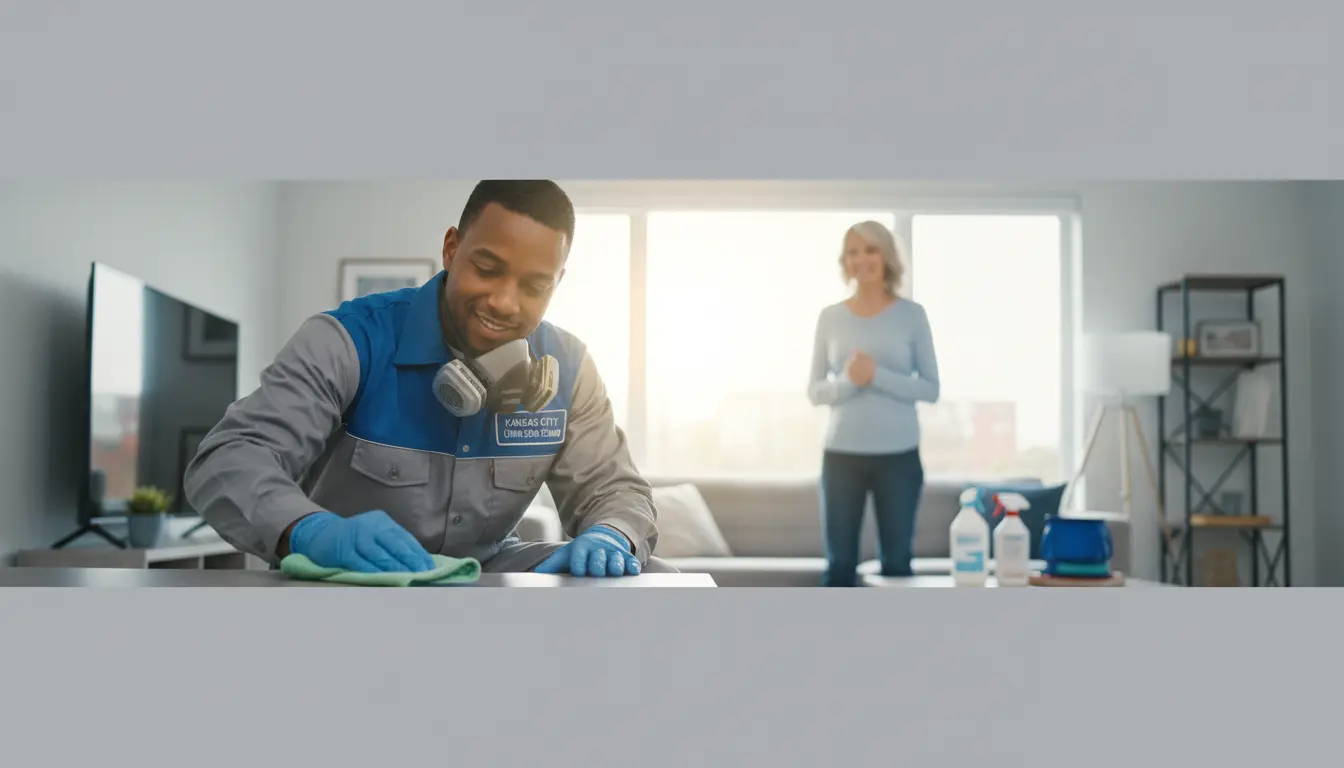
Most property owners assume that the first step after a traumatic event is to grab bleach, rubber gloves, and a mop. That instinct, however well-intentioned, is the single fastest way to compromise a safe, thorough remediation. The truth is that preparing a property for professional crime scene cleanup services means doing almost nothing to the scene itself. In fact, the best preparation is often about what you don’t do—and what you let the experts handle from the moment law enforcement releases the site.
Kansas City’s residential landscape, with its mix of historic mid-century brick homes and newer suburban developments, presents unique challenges that demand a specialized approach. Moisture from the humid Missouri River Valley accelerates biological degradation, and the porous materials common in older homes can harbor pathogens long after visible stains are gone. Professional biohazard remediation is not just about cleaning; it’s about restoring the structure to a safe, habitable condition while protecting the health of everyone who will enter the space. That’s why Kansas City Crime scene cleanup is the trusted partner for property owners who need discreet, technically rigorous, and compassionate service.
Why Letting Professionals Lead Is the Only Safe Option
When a crime, accident, or unattended death occurs, the property becomes a hazardous environment. Bloodborne pathogens such as hepatitis B, hepatitis C, and HIV can remain viable on surfaces for days or even weeks. Household cleaners like bleach are not registered by the EPA for use against these pathogens on porous surfaces, and they can actually aerosolize contaminants if used improperly. The IICRC S540 standard explicitly warns against using consumer-grade products for trauma scene cleanup.
Instead of trying to “help” by wiping down surfaces, the safest preparation is to secure the area, restrict access, and contact a certified remediation company immediately. Kansas City Crime scene cleanup deploys teams trained in OSHA Bloodborne Pathogens Standard 29 CFR 1910.1030, equipped with industrial-grade negative air machines, hospital-grade disinfectants, and ATP fluorescence testing to verify pathogen elimination. By stepping back, you allow the experts to contain the scene, prevent cross-contamination, and begin the structured remediation process without introducing additional variables.
The Technical Process of Professional Remediation
Professional crime scene cleanup follows a systematic, science-based workflow that begins long before any cleaning solution is applied. The first step is a comprehensive risk assessment, where the team evaluates the extent of contamination, identifies porous versus non-porous materials, and determines the level of personal protective equipment (PPE) required. In Kansas City, seasonal extremes—summer heat and humidity that can exceed 90% relative humidity, and winter cold that drives mold growth indoors—mean that the assessment must account for environmental conditions that affect microbial activity.
Once the assessment is complete, the team sets up containment barriers using polyethylene sheeting and negative air pressure to prevent airborne particles from migrating to unaffected areas. All biohazardous waste, including blood-soaked carpet, padding, drywall, and personal belongings, is removed and placed in red biohazard bags for incineration. The next phase involves chemical sanitation with EPA-registered disinfectants applied through electrostatic sprayers or fogging equipment to reach every crevice. Finally, ATP swab tests are used to confirm that biological contamination has been reduced to safe levels, and structural encapsulation may be applied to seal any remaining porous surfaces.
Kansas City Crime scene cleanup follows these exact protocols, and the company’s technicians are trained to handle the specific challenges of local properties, such as the crawl spaces common in mid-century homes where biological seepage can go undetected. For a deeper look at the timeline, visit How Long Does Professional Cleanup Take In Kc Area.
Professional Remediation vs. Standard Janitorial Cleaning
Many property owners mistakenly believe that a deep cleaning company can handle the aftermath of a traumatic event. The comparison below highlights the critical differences.
| Feature/Metric | Professional Biohazard Remediation | Standard Residential Cleaning |
|---|---|---|
| Regulatory Compliance | OSHA 29 CFR 1910.1030, IICRC S540, EPA FIFRA | None specific to biohazards |
| Pathogen Elimination | EPA-registered hospital-grade disinfectants; ATP testing | Household bleach or general-purpose cleaners |
| Structural Assessment | Identification of porous vs. non-porous materials; replacement vs. decontamination | Surface cleaning only |
| Waste Disposal | Licensed biohazard waste transport and incineration | Standard trash disposal (illegal for biohazards) |
| Odor Elimination | Industrial ozone generators, hydroxyl generators, enzyme treatments | Air fresheners or candles (ineffective) |
| Insurance Documentation | Detailed reports for claims; works with adjusters | No documentation |
Expert Insights: What Professionals Wish Property Owners Knew
Hidden Biological Seepage
Blood and bodily fluids can seep through cracks in subflooring, behind baseboards, and into wall cavities. In Kansas City’s older homes with plaster and lath construction, this seepage can be invisible for weeks. Professionals use moisture meters and thermal imaging to detect hidden contamination that standard cleaners would miss.
Porous Materials Require Replacement, Not Cleaning
Once a porous material like drywall, carpet, or upholstery is saturated with blood or other bodily fluids, no amount of cleaning can render it safe. The only acceptable remediation is physical removal and replacement. Attempting to clean these items risks trapping pathogens deep inside the material, where they can later become aerosolized.
Negative Pressure Is Non-Negotiable
Without negative air pressure, airborne contaminants will spread throughout the entire property. Professional teams set up negative air machines with HEPA filtration to create a controlled environment. This is especially critical in multi-story homes or apartments where cross-contamination can affect neighboring units.
Common Mistakes Property Owners Make
One of the most frequent errors is using household bleach. Bleach loses efficacy quickly in the presence of organic matter and does not kill all bloodborne pathogens. Another mistake is waiting for odors to dissipate naturally. Odors are a sign of ongoing microbial activity, and by the time they are detectable, structural damage may already be advanced. Finally, allowing untrained family members or friends to enter the site can introduce liability and compromise the chain of evidence if the scene is still under investigation.
Pricing Factors for Professional Crime Scene Cleanup
Costs for professional remediation vary based on the scope of work, but property owners should expect certain pricing structures. Here are the key components:
- Site mobilization fee: A flat fee to cover travel, setup of containment, and initial assessment. In the Kansas City metro area, this typically ranges from $250 to $500 depending on distance.
- Hourly remediation rates: Most companies charge by the hour for labor, with rates between $150 and $300 per technician. A standard trauma scene may require 4 to 8 hours of active work.
- Specialized disposal fees: Biohazardous waste must be transported by licensed carriers and incinerated. Costs can range from $100 to $500 per drum, depending on volume.
Three main factors influence the final bill: the extent of structural material replacement (e.g., removing and replacing drywall, flooring, and cabinetry), the total volume of biohazardous waste, and the need for specialized HVAC decontamination if the HVAC system has been contaminated.
Safety Standards and Certifications You Can Trust
Legitimate crime scene cleanup companies operate under strict regulatory frameworks. The most important is the OSHA Bloodborne Pathogens Standard (29 CFR 1910.1030), which mandates specific training, PPE, and protocols for handling human blood and other potentially infectious materials. Additionally, the IICRC S540 standard provides a voluntary certification for trauma and crime scene cleanup, ensuring that technicians follow industry best practices for containment, cleaning, and verification.
Beyond initial training, certified companies use authorized waste management services that comply with the Environmental Protection Agency (EPA) and state regulations. In Missouri, biohazardous waste must be tracked with manifests from generation to final disposal. Kansas City Crime scene cleanup holds all relevant certifications and works closely with local law enforcement, insurance adjusters, and property managers to ensure that every job meets the highest safety standards. For property owners, this means peace of mind that the site is not just visually clean, but biologically safe.
Frequently Asked Questions About Crime Scene Cleanup
What should I do immediately after a traumatic event on my property?
First, ensure that law enforcement has completed their investigation and released the scene. Do not attempt any cleaning or disturbance. Secure the area by locking doors and restricting access to authorized personnel only. Then contact a professional biohazard remediation company. The sooner you call, the sooner containment can begin, which reduces the risk of odor migration and secondary damage. Kansas City Crime scene cleanup offers 24/7 emergency response and can be on-site within hours.
Can I stay in my home during the cleanup?
Generally, no. The remediation process involves containment zones, negative air pressure, and the use of chemicals that may require temporary evacuation. Depending on the severity, you may need to be away for 24 to 72 hours. The cleanup team will advise you on the timeline and can help coordinate temporary accommodations if needed. Your health and safety are the top priority, and exposure to aerosolized pathogens or chemical fumes must be avoided.
How is odor eliminated after biological contamination?
Odor elimination is a multi-step process. After physical removal of contaminated materials, the team uses industrial-grade ozone generators or hydroxyl generators to break down odor molecules at the chemical level. Enzyme treatments may also be applied to neutralize residual organic matter deep within porous surfaces. Finally, structural encapsulation with a sealant can lock in any remaining odors. This is far more effective than air fresheners, which only mask the smell temporarily. For more details, see Odor Elimination Services.
Will my homeowner’s insurance cover the cost of cleanup?
Many standard homeowner’s policies include coverage for sudden and accidental events, but coverage varies widely. Some policies explicitly exclude crime scene cleanup, while others may cover it under “property damage” or “additional living expenses.” It is essential to contact your insurance provider as soon as possible and ask specifically about biohazard remediation. Kansas City Crime scene cleanup can work directly with your adjuster to provide documentation and estimates. The article Kansas City Crime Scene Cleanup What Insurance Covers offers a comprehensive overview.
Professional Biohazard Remediation in Kansas City
Preparing a property for professional crime scene cleanup is not about rolling up your sleeves—it’s about knowing when to step back and trust the experts. The technicians at Kansas City Crime scene cleanup bring years of experience, rigorous training, and a deep understanding of local conditions, from the humidity of the Missouri River Valley to the construction quirks of historic Kansas City homes. They handle every step with compassion and discretion, allowing property owners to focus on healing and recovery.
When you choose Kansas City Crime scene cleanup, you’re not just getting a cleaner site; you’re getting a certified restoration partner committed to safety, compliance, and peace of mind. Whether you need emergency response, structural restoration, or personal property disposal, the team is ready to help. For a full overview of services, visit the Services page.